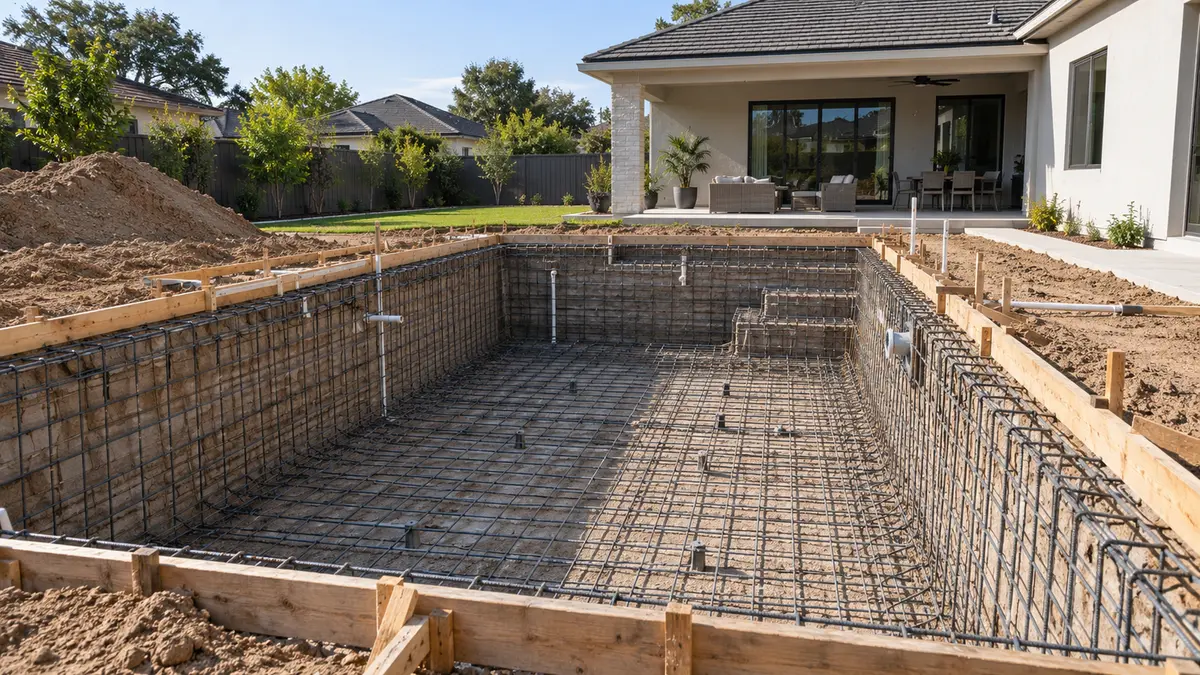
How much does an inground pool cost?
Most new inground pools cost between $25,000 and $100,000 installed, the national range HomeGuide publishes. HomeAdvisor puts the typical project at $44,499 to $87,349, with most homeowners spending about $65,909. Pool type, size and site conditions decide where you land.
The extremes are wider. NerdWallet, citing Angi, reports a full range of $14,000 to $135,000 with an average near $66,000, and HomeAdvisor’s own full range is the same $14,000 to $135,000. Small, simple vinyl pools sit at the bottom. Large custom concrete pools with water features, automation and big patios sit at the top.
Per square foot, the published figures are $80 to $250 installed (HomeGuide), $90 to $250 (HomeAdvisor), and $180 to $350 of pool space for a standard 12 × 24 ft pool (This Old House). The spread mostly reflects what each guide counts: some price the pool alone, others include equipment and a basic deck.
The calculator above starts from the published range for the pool type you choose, places your project in the lower, middle or upper third of that range, then adds the add-ons you tick and your decking area. It is a budgeting tool, not a quote. The full method is on our methodology page.
Inground pool cost by type
Vinyl liner pools cost the least to build, fiberglass sits in the middle, and concrete costs the most, though the ranges overlap heavily. This table shows each guide’s own figures so you can see how much they agree.
| Pool type | HomeGuide | Fixr | This Old House (12 × 24 ft) | This Old House per sq ft |
|---|---|---|---|---|
| Vinyl liner | $25,000–$65,000 | $35,000–$65,000 (avg $45,000) | $38,000–$70,000 | $130–$240 |
| Fiberglass | $45,000–$100,000 | $50,000–$95,000 (avg $70,000) | $50,000–$95,000 | $175–$330 |
| Concrete (gunite/shotcrete) | $50,000–$120,000 | $50,000–$90,000 (avg $60,000) | $58,000–$100,000 | $200–$350 |
Fixr’s averages describe specific example builds: a 12 × 24 ft vinyl rectangle with steps, heater, filter and concrete deck; a 15 × 30 ft fiberglass pool with deck, filter, heater and pump; and a 12 × 24 ft shotcrete pool with tile and basic equipment.
Concrete (gunite or shotcrete)
Concrete costs the most to build and offers the most freedom: any shape, size or depth, finished in plaster, quartz or pebble. It also costs the most to run, because the interior finish needs periodic resurfacing and the surface uses more chemicals. HomeGuide says a concrete shell can last 50 years or more. Our breakdown of concrete (gunite) pool cost covers finishes and resurfacing in detail.
Fiberglass
A fiberglass pool is a one-piece, factory-made shell, so installation is fast and the smooth gelcoat surface needs fewer chemicals. The trade-off is a fixed menu of shapes and sizes, and the shell has to be trucked in and set by crane. HomeGuide gives fiberglass pools a 25–30 year life, with possible refinishing around year 10. See fiberglass pool cost for shell, installation and lifetime figures.
Vinyl liner
Vinyl liner pools have the lowest upfront price and still allow custom shapes, but the liner is a wear part. Published replacement intervals run from 5 to 12 years. Our guide to vinyl liner pool cost shows how liner replacements change the long-run math.
What drives the cost of an inground pool?
Pool type and size set the baseline; the site and the finishes decide whether you end up at the low or high end of the range. These seven factors move quotes the most.
- Size and depth. More area and depth mean more digging, more shell material and bigger equipment. Per-square-foot pricing is why a 16 × 32 ft pool costs noticeably more than a 12 × 24 ft pool of the same type.
- Shape. Rectangles are simplest to form and fit. Freeform and geometric designs add labor on concrete and vinyl pools, and fiberglass buyers are limited to the molds a manufacturer offers.
- Access and excavation. Excavators, concrete trucks and, for fiberglass, a crane need a path to the hole. Narrow side yards, slopes, retaining walls and fences that must come down all add time and equipment. Hauling away the excavated soil is often a separate line item.
- Soil, rock and groundwater. Rock that has to be broken, unstable soil or a high water table can require extra equipment, engineering or pumping. Contractors often price these as allowances because nobody knows the full extent until digging starts.
- Permits and inspections. Most areas require building and electrical permits, and many require a compliant barrier before the final inspection. Fees and rules are set locally, so get them in writing.
- Finishes and features. Tile, coping stone, interior finish, lighting, water features, automation and heating each move the total by thousands.
- Region. Labor rates, permit fees and the length of the building season vary across the country. Every figure on this page is a national range, and your local market can sit outside it.
What extra costs come with an inground pool?
Fencing, decking and heating are the extras most often left out of an initial pool price, and together they can cost as much as a small pool. Ask every contractor to state in writing which of these are included.
| Extra | Published cost | Source |
|---|---|---|
| Pool fence | $2,000–$13,500 ($10–$45 per linear ft) | HomeGuide |
| Pool fence | $1,500–$10,000 (avg $4,000) | HomeAdvisor |
| Pool deck | $25–$50 per sq ft; $5,000–$20,000 total | HomeGuide |
| Concrete deck around a 12 × 24 ft pool | $6,750–$8,000 (avg $7,500) | Fixr |
| Gas heater, installed | $1,500–$4,500 | HomeGuide |
| Heat pump, installed | $2,000–$6,000 | HomeGuide |
| New gas line for a heater | $500–$2,000 | HomeAdvisor |
| Saltwater system on a new pool | $500–$3,300 | HomeAdvisor |
| Automatic cover | $8,000–$20,000 | HomeGuide |
| Manual safety cover | $1,000–$3,600 | HomeGuide |
| Pool lights | $700–$1,800 | HomeGuide |
| First fill | $40–$2,000 | HomeGuide |
Fence. A barrier is usually required by local code and is the most important safety feature you will buy. The U.S. Consumer Product Safety Commission’s safety barrier guidelines for residential pools call for a fence at least 4 feet high that fully surrounds the pool, with self-closing, self-latching gates, plus door alarms where the house forms one side. Budget for it from day one.
Decking. HomeGuide notes that a ground-level patio runs $5 to $35 per sq ft installed, so the material you choose matters as much as the area. The calculator above uses HomeGuide’s $25–$50 per sq ft pool deck figure.
Electrical. Pumps, lights, heaters and salt cells need wiring and bonding, and Fixr notes a heat pump needs a dedicated circuit. None of our sources publish a national electrical figure, so ask for it as its own line.
Landscaping and yard repair. Lawn restoration, plantings and drainage fixes after construction are rarely part of a pool contract. We found no reliable national figure, so get local bids before you commit.
Filling. HomeGuide puts the first fill at $4–$10 per 1,000 gallons from a garden hose, or $30–$100 per 1,000 gallons by delivery truck. The pool volume calculator tells you how many gallons you are paying for.
How long does it take to build an inground pool?
Fiberglass is fastest, vinyl liner is next, and concrete takes longest. The published timelines disagree, partly because some count only on-site construction while others cover the full project.
| Pool type | HomeGuide | HomeAdvisor |
|---|---|---|
| Fiberglass | not stated | 2–4 weeks |
| Vinyl liner | 2–3 weeks | 4–8 weeks |
| Concrete | 6–8 weeks | 3–6 months |
Fixr agrees fiberglass is quick: the shell itself can be set in a few days, and order-to-swim takes only a few weeks. For concrete, HomeGuide’s 6–8 weeks describes the build, while HomeAdvisor’s 3–6 months describes full installation. If you need the pool by a set date, plan around the longer figure and add time for permit review and local weather.
Which pool type costs the least over its lifetime?
Vinyl wins on upfront price, but liner replacements, resurfacing and chemicals narrow the gap over 10 to 20 years. The table lists the major recurring costs for each type.
| Pool type | Major recurring job | How often | Cost each time | Yearly chemicals (HomeGuide) |
|---|---|---|---|---|
| Vinyl liner | New liner | 5–9 yrs (Fixr); 6–12 yrs (HomeGuide); 7–8 yrs (This Old House) | $3,000–$7,500 (HomeGuide); $4,000–$6,000 (Fixr) | About $400 |
| Concrete | Replaster or resurface | Plaster lasts 7–12 yrs (HomeGuide); 5–10 yrs (HomeAdvisor) | $6,000–$15,000 (HomeGuide, HomeAdvisor) | About $750 |
| Fiberglass | Possible refinishing | Around 10 yrs (HomeGuide) | No consistent published figure | About $175 |
This Old House estimates 10-year maintenance at $11,000–$17,000 for vinyl and $27,000–$40,000 for concrete, and long-term upkeep for fiberglass at $5,000–$15,000.
Worked example, 20 years. At HomeGuide’s 6–12 year interval, a vinyl pool needs one to three new liners in 20 years. At $3,000–$7,500 each, that adds $3,000–$22,500. A concrete pool with standard plaster lasting 7–12 years needs one or two replasters at HomeGuide’s $6,000–$8,000 replaster price, adding $6,000–$16,000, plus roughly $350 more a year in chemicals than vinyl by HomeGuide’s estimates.
Equipment wears out on every pool type; HomeGuide says pool heaters last 10–12 years. For the yearly running budget, use the pool maintenance cost calculator.
How should I pay for an inground pool?
Most buyers pay with savings, borrow against home equity, take an unsecured personal or pool loan, or use financing arranged by the builder. Each option differs in rate, fees, term and risk, and rates change constantly, so compare written offers rather than a quoted monthly payment.
- Compare total cost, not the monthly payment. Add up all interest and fees over the full term for each offer.
- Know what secures the loan. Home-equity loans and lines of credit use your house as collateral.
- Ask about cash pricing. If the builder arranges financing, ask whether the project price changes if you pay another way.
- Finance the whole project. Include fence, deck, electrical and yard repair, not just the pool.
- Keep a cushion. Rock, soil and access surprises show up after the contract is signed.
- Budget the running costs. Upkeep continues every month the loan does.
We are not financial advisers. Talk to a lender or a licensed financial professional before you borrow.
How do I compare pool quotes?
Get at least three written quotes for the same scope and compare them line by line. The lowest total is often the bid that leaves the most out.
- Match the spec. Same pool type, size, depth and shape in every bid.
- List what is included. Excavation and soil haul-off, shell or kit, plumbing, equipment make and model (pump, filter, heater, sanitizer), electrical, tile and coping, interior finish, decking, fence, start-up chemicals and the first fill.
- Read the allowances. Find out how rock, groundwater and access problems are priced if they exceed the allowance.
- Settle permits. Confirm who pulls and pays for each permit and inspection.
- Tie payments to milestones. Each payment should follow a completed stage of work.
- Get warranties in writing. Structure or shell, interior surface, equipment and workmanship are separate warranties.
- Check license and insurance. Verify both with your state or local licensing authority.
- Pin down the schedule. Note the start date, the expected finish and which delays the contractor is responsible for.